Not every stubborn injury needs surgery. Not every chronic pain responds to rest alone. Plenty of people spend months cycling through rest, stretching, and standard physio without getting traction, and end up wondering whether surgery is the only option left. For a growing number of musculoskeletal conditions, particularly tendon injuries and calcification, shockwave therapy offers a clinically proven path forward that sits well before more invasive interventions. Knowing which injuries genuinely respond to it, and when the timing is right, changes how you approach recovery.
What Is Shockwave Therapy?
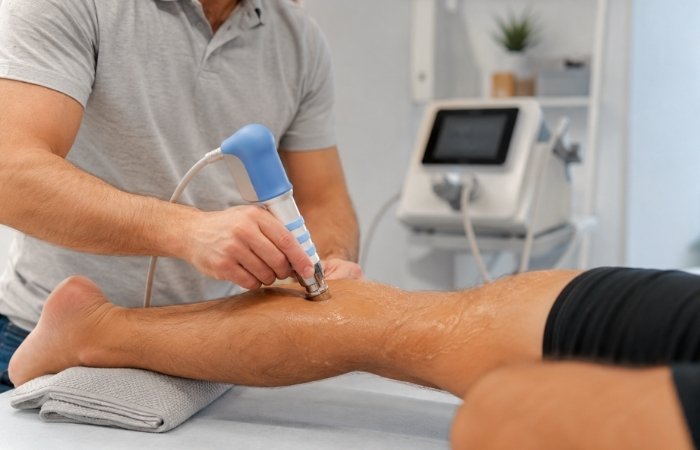
Shockwave therapy is a non-invasive treatment that delivers high-energy acoustic waves into damaged tissue. Those waves create a controlled mechanical stimulus that triggers the body’s own repair mechanisms, including increased blood flow, collagen production, and the breakdown of calcified deposits or scar tissue.
It’s been used in sports medicine and rehabilitation for decades, and the evidence base has grown steadily. It’s not a new or experimental treatment. It’s a clinically established option for conditions that have proved resistant to standard physiotherapy alone.
Sessions typically run 15 to 30 minutes. There’s no downtime, no anaesthesia, and no recovery period.
Why Shockwave Therapy Works for Chronic and Stubborn Injuries
Acute injuries heal through a predictable biological process. The body sends inflammatory cells, rebuilds tissue, and gradually restores function. The problem is that some injuries stall partway through. Tendons, in particular, have poor blood supply, which makes them slow to heal and prone to chronic degeneration rather than full repair.
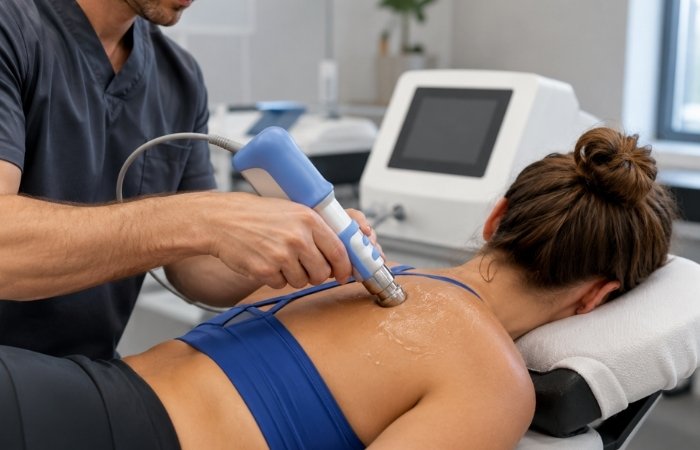
Shockwave therapy essentially restarts that process. The acoustic energy stimulates the cells responsible for tissue repair, increases local circulation, and disrupts the calcified or fibrotic tissue that has accumulated over time. It doesn’t mask pain. It targets the underlying structural problem.
That’s why it’s most effective for conditions that have been present for weeks or months, rather than fresh acute injuries. If you’re dealing with something that hasn’t resolved despite rest, stretching, and standard manual therapy, shockwave therapy may be exactly what your recovery is missing.
Which Conditions Respond Best to Shockwave Therapy
Shockwave therapy isn’t a blanket solution for every musculoskeletal complaint. It performs best for a specific category of conditions: tendon-related injuries, calcification, and chronic soft tissue problems that haven’t responded to conservative care.
Plantar fasciitis is one of the most common and well-researched applications. Heel pain that lingers beyond six weeks, particularly that sharp first-step pain in the morning, is a strong indicator. Shockwave breaks down calcium deposits in the plantar fascia and stimulates tissue repair in a structure that’s notoriously slow to recover.
Achilles tendinopathy is another primary target. Whether the pain sits at the mid-portion of the tendon or at the insertion point on the heel, shockwave promotes collagen regeneration in tissue that has typically become degenerative rather than simply inflamed.
Calcific tendonitis of the shoulder responds particularly well. Calcium deposits in the rotator cuff can cause severe pain and restricted movement. Shockwave therapy dissolves those deposits progressively, often producing dramatic improvements in range of motion and pain within a few sessions.
Lateral and medial epicondylitis (tennis elbow and golfer’s elbow) are tendon overuse conditions that commonly plateau with standard treatment. Shockwave targets the damaged tissue at the attachment points of the forearm tendons, breaking down scar tissue and re-initiating healing.
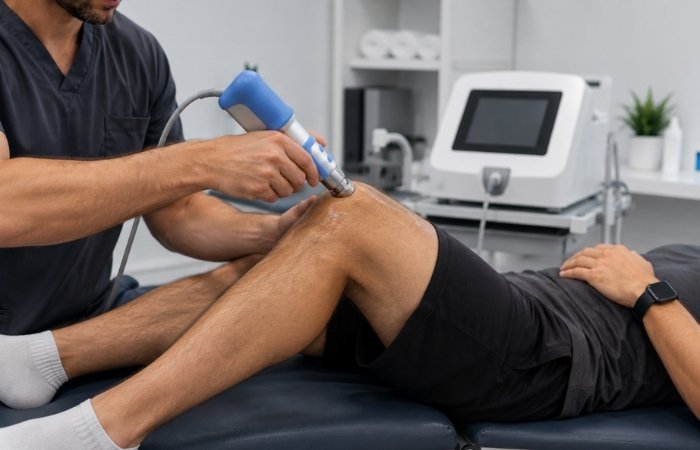
Patellar tendinopathy, sometimes called jumper’s knee, is common in running and jumping sports. It can become chronically symptomatic without the right stimulus for repair. Shockwave provides that stimulus without requiring the tendon to be loaded through painful exercise.
Hamstring and hip tendon injuries, shin splints, and chronic neck and back pain related to myofascial trigger points also fall within the treatment’s effective range.
When Is the Timing Right
The single most important question isn’t whether shockwave therapy is appropriate for your condition. It’s whether you’re at the right point in your recovery timeline for it to work.
Shockwave therapy is not typically the first treatment you’d try. It’s most effective after standard physiotherapy approaches have been given a reasonable run and the condition has persisted beyond six to twelve weeks. For truly chronic conditions, those that have been present for six months or more, it becomes an even stronger option because the body’s natural healing response has largely stalled.
It’s also the right choice when you’re trying to avoid more invasive interventions. If cortisone injections haven’t produced lasting relief, or if a specialist has suggested surgery as a next step, shockwave therapy is a clinically appropriate option to explore before escalating.
Shockwave Therapy vs Other Treatment Options
Treatment | Best For | Invasive | Downtime | Addresses Root Cause |
Shockwave Therapy | Chronic tendon and soft tissue conditions | No | None | Yes |
Cortisone Injection | Acute inflammation | Minimally | Minimal | No |
Surgery | Structural tears or failed conservative care | Yes | Weeks to months | Yes |
Standard Physiotherapy | Acute injuries, early-stage conditions | No | None | Partially |
Rest Alone | Minor acute injuries | No | Variable | No |
What to Expect from a Shockwave Therapy Session
Understanding the process removes the uncertainty that often makes people hesitant.
Assessment.
Your physiotherapist will confirm the diagnosis and identify the exact treatment site. Not every painful structure is the right target.
Gel application.
A coupling gel is applied to the skin to help the acoustic waves transmit effectively into the tissue.
Treatment delivery.
The shockwave handpiece is applied to the area. You’ll feel a rhythmic pulse. Some discomfort is normal, particularly over the most affected area, but it’s generally well tolerated.
Immediate aftercare.
There are no restrictions post-treatment. Most patients continue their normal activities the same day.
Session frequency.

Most conditions require three to six sessions, typically spaced one week apart. Your physiotherapist will adjust this based on how your tissue responds.
Some patients notice improvement after the first or second session. Others experience a temporary increase in discomfort before it settles, which reflects the treatment stimulating a healing response. The trajectory generally trends clearly upward by the third session.
Who Is Not a Candidate for Shockwave Therapy
Shockwave therapy is safe and well tolerated for most people, but there are specific circumstances where it’s not appropriate.
It shouldn’t be used directly over open wounds, active infections, or tumour sites. It’s not recommended during pregnancy. Patients with blood-clotting disorders or those taking anticoagulant medications require careful assessment before treatment. It’s also not suitable for acute muscle tears or fractures where tissue integrity is compromised.
A thorough assessment by a qualified physiotherapist will identify whether any of these factors apply and whether shockwave therapy is safe and appropriate for your specific situation.
Frequently Asked Questions
How do I know if my condition is suitable for shockwave therapy?
The best indicator is chronicity. If you’ve had a tendon-related injury, heel pain, or shoulder calcification that hasn’t responded adequately to rest and standard physiotherapy over six or more weeks, shockwave therapy is worth discussing with your physiotherapist. A clinical assessment will confirm whether the condition and tissue site are appropriate for treatment.
Does shockwave therapy hurt?
Most people experience some discomfort during treatment, particularly over the most sensitised area. It’s typically described as a deep, rhythmic pressure rather than sharp pain. The intensity can be adjusted to remain within a manageable range, and the discomfort generally reduces as the session progresses.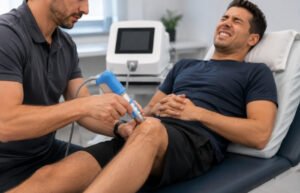
How many sessions will I need?
Most conditions are treated across three to six sessions, spaced roughly one week apart. Chronic or complex presentations may require additional sessions. Your physiotherapist will monitor your response and adjust accordingly.
Can I have shockwave therapy and regular physiotherapy at the same time?
Yes, and in most cases it’s the preferred approach. Shockwave therapy works best as part of a broader treatment plan that includes exercise rehabilitation and manual therapy. It accelerates the tissue repair process, while physiotherapy builds the strength and movement patterns that prevent the condition from recurring.
Will my injury come back after shockwave therapy?
Shockwave therapy addresses the structural problem in the tissue, not just the symptoms. For most patients, the results are lasting when combined with appropriate rehabilitation. Without addressing contributing factors like load management, movement patterns, or biomechanical issues, any tendon condition can recur regardless of the treatment used.
Making the Right Call on Your Recovery
Shockwave therapy works because it addresses what most conservative treatments can’t reach. Degenerative tendons, calcified tissue, and chronically inflamed structures need more than rest and manual therapy to recover fully. They need a targeted stimulus that rebuilds tissue at a cellular level, and that’s precisely what shockwave therapy delivers.
At Mickleham Physiotherapy, our approach to shockwave therapy starts with understanding your injury properly. We assess the condition, review your treatment history, and determine whether shockwave therapy is clinically appropriate before recommending it. For patients who are suitable, it becomes part of a structured rehabilitation plan built around your specific recovery needs. Many of our patients come to us after months of treatment that hasn’t delivered results. If that’s where you are, contact us to find out whether shockwave therapy is the intervention that changes the trajectory of your recovery.