

Leg pain that starts in the lower back and travels past the knee is rarely a simple muscle strain. Sciatica has a specific mechanism behind it, and treating it like ordinary back pain is why so many people put up with it far longer than they need to.
The pain you feel in your calf or foot usually has nothing to do with your calf or foot. The problem sits higher up, where a nerve root leaves the spine. Once you understand that, the treatment logic changes completely, and so does the role sciatica physiotherapy plays in getting you moving again.
Most episodes do settle. What often separates a shorter recovery from a drawn-out one is how early the load gets managed and how well the rehabilitation is structured.
What Sciatica Actually Is
Sciatica is pain caused by irritation or compression of the sciatic nerve or the nerve roots that form it in the lower back. It typically travels from the buttock down the back of one leg and can bring numbness, tingling or weakness with it. Sciatica is a symptom pattern, not a diagnosis in its own right.
The sciatic nerve is the largest nerve in the body. It forms from nerve roots in the lower lumbar and upper sacral spine, runs through the buttock, and branches down the leg to the foot. When one of those roots is compressed or chemically irritated, the brain interprets the signal as pain in the area that nerve supplies, which is why the ache shows up in the leg rather than the back.
That distinction matters clinically. Rubbing the hamstring will not change what is happening at the nerve root. Effective treatment has to address the source of the irritation, the way you load your spine, and the sensitivity of the nerve itself.
What Causes Sciatica
Sciatica is a downstream effect of something happening in or around the lumbar spine. The most common drivers include the following.
- Lumbar disc bulge or herniation. Disc material presses against or inflames a nerve root. This is the most frequent cause in adults under 50.
- Spinal stenosis. The space around the nerves narrows, usually through age- related change. More common from the sixties onward.
- Degenerative disc and facet joint change. Loss of disc height and bony change can reduce the space a nerve root passes through.
- Spondylolisthesis. One vertebra slips forward on another and narrows the nerve exit.
- Deep gluteal or piriformis irritation. The nerve is compressed or sensitised as it passes through the buttock rather than at the spine.
- Pregnancy-related load change. Shifts in posture, weight distribution and ligament laxity can irritate the lower back and nerve roots.
Rarely, sciatica reflects something more serious such as infection or a space-occupying lesion. That is uncommon, but it is one of the reasons a proper assessment matters before anyone starts treating.

Lifestyle and load factors also stack the odds. Long hours seated, repetitive lifting with poor mechanics, a sudden spike in physical work after a quiet period, low general conditioning and smoking all increase the likelihood of an episode and can slow recovery once one starts.
How to Recognise Sciatica Symptoms
Sciatica has a recognisable signature. Pain travels below the gluteal region behind the thigh or the knee in one leg, often described as sharp, burning or electric rather than the dull ache of general back pain. It usually follows a defined line down the buttock and leg and may come with pins and needles, numbness or weakness.
Common features include the following:
- One-sided leg pain that extends past the knee, sometimes into the foot
- A sharp, shooting or burning quality rather than a diffuse ache
- Pins and needles or numbness in a specific band of skin
- Weakness in the leg or foot, such as trouble pushing up onto the toes
- Symptoms that worsen with prolonged sitting, bending forward, coughing or sneezing
- Back pain that may be milder than the leg pain, or absent altogether
Not all leg pain is sciatica, and the difference changes the treatment plan.
Condition | Typical pain pattern | Key distinguishing feature |
Sciatica (lumbar nerve root) | Buttock to below the knee, one side | Nerve symptoms such as numbness, tingling or weakness |
Gluteal tendinopathy | Side of the hip, sometimes outer thigh | Painful to lie on the affected side, rarely below the knee |
Hip osteoarthritis | Groin and front of thigh | Stiff after rest, limited hip rotation |
Referred lumbar pain | Buttock and upper thigh | Vague, hard to pinpoint, stops above the knee |
Some symptoms need urgent medical attention rather than a physiotherapy booking. Loss of bladder or bowel control, numbness through the saddle region, or rapidly worsening weakness in both legs should be assessed at a hospital emergency department immediately.
Why Early Management Changes the Outcome
Nerve pain feeds on avoidance. When leg pain flares, the natural response is to stop moving, sit carefully and wait it out. A few days of relative rest is reasonable. Weeks of it is not, because the muscles that support the lumbar spine deload quickly, the nervous system becomes more sensitive, and the threshold for triggering pain drops.
Many acute episodes settle over six to twelve weeks, though recovery timeframes vary considerably between individuals and depend on the underlying cause. The people who tend to recover more predictably are the ones who keep moving within tolerable limits, load progressively and address the habits that contributed in the first place.
Delay also makes assessment harder. Early on, the pattern of symptoms usually points clearly to the level involved. After months of guarding and compensation, secondary hip, glute and thoracic problems layer over the original one.
How Physiotherapy Treats Sciatica
Physiotherapy for sciatica works on three fronts at once. It aims to reduce irritation at the nerve root, restore the movement and strength that has been lost, and rebuild your capacity to handle normal daily load.
Treatment begins with assessment rather than technique. A physiotherapist takes a history, screens for anything requiring medical referral, and runs a neurological examination covering reflexes, sensation and muscle strength to identify which nerve level is involved. Movement testing then establishes which positions ease symptoms and which provoke them, which becomes the backbone of the plan.
From there, a plan for sciatica physiotherapy may draw on several approaches:
- Directional loading. Repeated movements in the direction that centralises symptoms, moving pain out of the leg and closer to the spine.
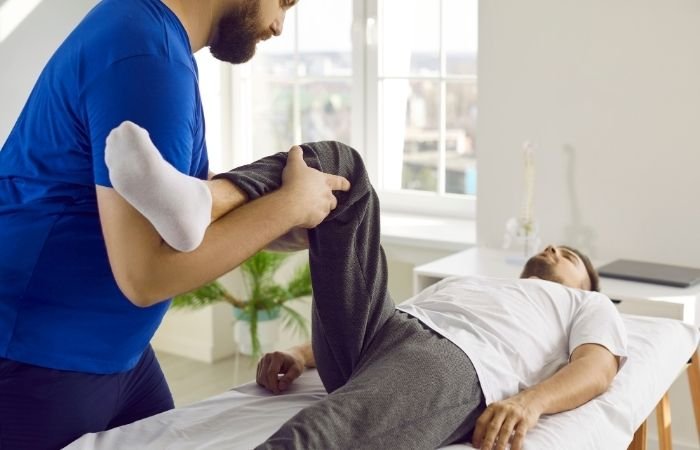
- Manual therapy. Hands-on techniques to improve segmental mobility and reduce protective muscle guarding around the lumbar spine, hip and pelvis.
- Neural mobilisation. Graded techniques intended to improve the nerve’s ability to glide and tolerate tension without flaring.
- Progressive strengthening. Targeted work through the glutes, trunk and legs to share load away from irritated structures.
- Load and activity education. Practical adjustments to sitting, lifting, driving and training so recovery is not undone between sessions.
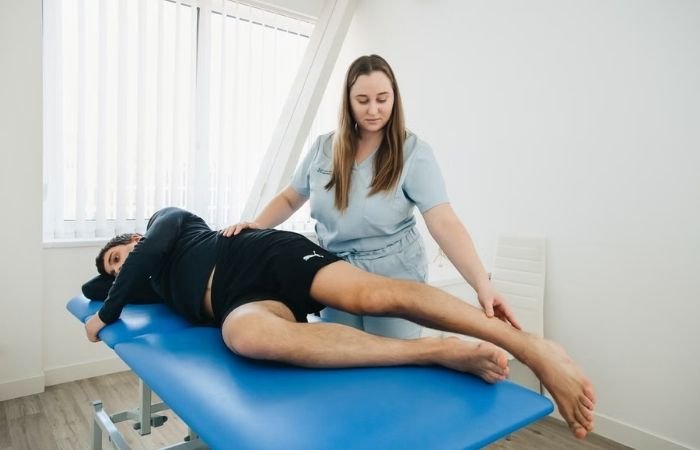
Adjunct treatments including manual therapy, dry needling, shockwave therapy, spinal decompression, hydrotherapy and electrotherapy may be used alongside active rehabilitation where a physiotherapist judges them clinically appropriate. The evidence supporting each varies, and suitability differs between individuals. They support the plan rather than replace it, because passive treatment alone does not build the capacity that reduces the likelihood of recurrence.
Results vary from person to person, and the right combination depends on the findings of an individual assessment.
What a Sciatica Rehabilitation Plan Looks Like Step by Step
Recovery follows a sequence. Skipping ahead is one of the more common reasons people flare repeatedly.
- Assess and screen. Establish the source and rule out anything needing medical referral.
- Settle the nerve. Reduce irritation using positions of relief, load modification and hands-on treatment so daily function becomes manageable.
- Restore movement. Reintroduce lumbar and hip mobility, and begin gentle neural glides once irritability drops.
- Build strength. Progressively load the glutes, trunk and legs to improve tolerance and reduce demand on the affected segment.
- Return to full load. Rebuild the specific tasks that matter to you, whether that is lifting at work, running, or sitting through a long commute.
- Reduce the risk of recurrence. Keep a minimum effective dose of strength work and manage the load spikes that caused trouble in the first place.
Phase | Main focus | What it looks like |
Settle | Reduce nerve irritation | Position changes, walking, manual therapy |
Restore | Regain movement | Mobility drills, graded neural glides |
Strengthen | Build load tolerance | Hip and trunk strength, progressive resistance |
Maintain | Hold onto capacity | Ongoing strength work, load management |
When to Have Sciatica Assessed
Book an assessment if leg pain has persisted beyond a week or two, if it is disturbing your sleep, if you notice numbness or weakness, or if the same episode keeps returning every few months. Recurring sciatica often reflects an unaddressed load or strength issue rather than bad luck.
Imaging is not the starting point for most cases. Scans frequently show disc changes in people with no symptoms at all, which means a finding on a report does not automatically explain your pain.
Every case is different, and any treatment plan should follow an individual assessment by a qualified practitioner.
Frequently Asked Questions
Can sciatica go away on its own?
Many acute episodes improve without formal treatment as the irritation around the nerve root settles. The catch is that the underlying load or strength issue often remains, which is why episodes tend to return. Any weakness, numbness or symptoms lasting beyond a couple of weeks warrant assessment.
How long does sciatica take to recover with physiotherapy?
It depends on the cause, the severity and how long symptoms have been present. Longstanding cases generally take longer and need a more gradual loading progression than a first acute episode. An assessment gives you a realistic timeframe for your presentation rather than a generic one.
Should you rest or keep moving with sciatica?
Movement within tolerable limits is generally preferred over rest. A day or two of reduced activity during a severe flare is reasonable. Beyond that, the aim is to find the positions and activities you can tolerate and build from there.
Is walking good for sciatica?
Walking suits most people early on because it maintains mobility without heavy spinal loading. Watch how symptoms behave afterwards rather than only during. Pain that travels further down the leg, or lingers well into the next day, is a sign the distance needs winding back.
Do you need an MRI for sciatica?
Most cases do not require imaging. A physiotherapist or doctor may recommend a scan when symptoms fail to improve as expected, when neurological signs are progressing, or when surgical options are being considered. Your treating practitioner can advise what is appropriate for your situation.
Getting Ahead of the Next Flare
Sciatica is a nerve problem with a spinal origin, and it responds to a plan that addresses both the irritation and the capacity behind it. Rest and painkillers manage the symptom. Assessment, graded loading and progressive strength work address the reason it started.
Mickleham Physiotherapy Services works with spinal and nerve-related pain across Melbourne’s northern suburbs, with physiotherapy and osteopathy available under one roof. Care for a presentation like sciatica generally starts with a full assessment and neurological screen, then combines manual therapy with a progressive exercise plan built around what you can currently tolerate. Adjuncts including dry needling, shockwave therapy, spinal decompression and hydrotherapy are available on site where a practitioner considers them appropriate.
The clinic also works across post-surgical rehabilitation, chronic pain management, sports injury rehabilitation, postural correction and NDIS physiotherapy. That matters for sciatica, because leg pain rarely arrives on its own. An old knee problem, a physical job or a surgery you are still recovering from can all change how the loading plan needs to be built.
If leg pain has been dictating how you sit, sleep and work, the next step is finding out which structure is driving it. Contact us to arrange a sciatica assessment with the team at Mickleham Physiotherapy Services.